Sibiya’s Bail Hearing Turns on More Than Where He Was Arrested

Updated: 6 hours ago
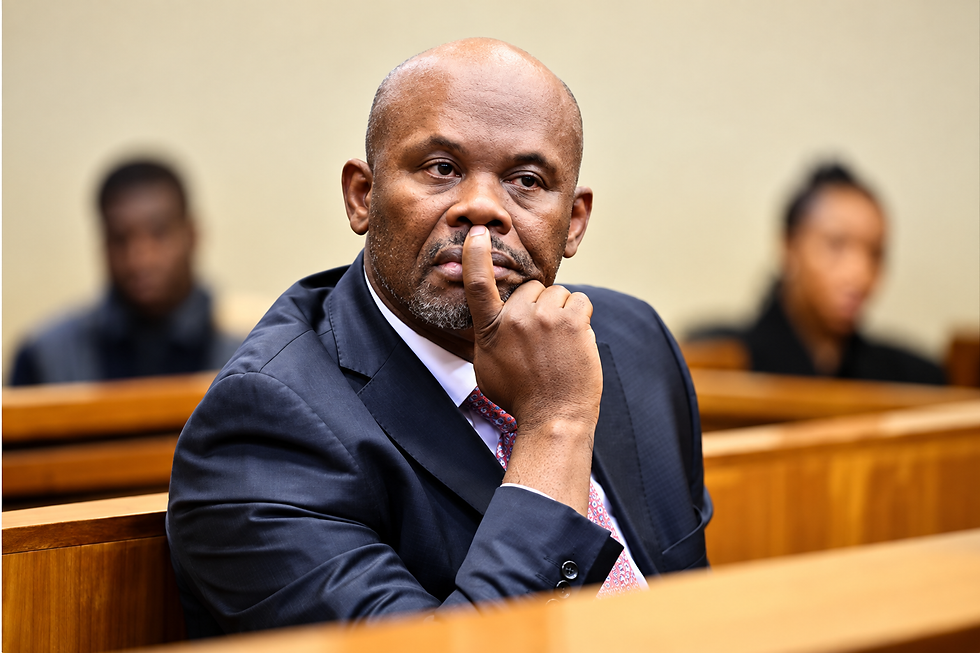
Suspended Deputy National Police Commissioner Shadrack Sibiya’s bail hearing has moved into a more detailed phase, with his legal team challenging parts of the State’s account of his arrest and the circumstances surrounding the allegations against him. Sibiya, 59, is facing six charges, including rape, sexual grooming of a minor, human trafficking and negligent handling of a firearm. He has denied wrongdoing. The allegations are being tested in the Randburg Magistrate’s Court, where the State is opposing his release on bail.
One of the disputes now before the court concerns The Grand in Sandton, the venue where Sibiya was arrested on 21 September. His legal team has argued that he was arrested in a restaurant area within the establishment, rather than in the strip-club section. The investigating officer has maintained that she arrested him in the adult-entertainment area. On its own, the disagreement about the precise location of the arrest may appear minor. But within a bail hearing, such details can become relevant because both sides are testing the reliability of the evidence, the credibility of witnesses and the broader version of events being presented to the court.
The court has also heard competing accounts about an earlier outing involving Sibiya and three young women. The State alleges that he took them to The Grand before later going to a Sandton hotel, where he is accused of raping an 18-year-old woman after she became heavily intoxicated. Sibiya has acknowledged having sex with the woman but maintains that the encounter was consensual.
Separately, the State alleges that Sibiya sexually groomed a 16-year-old girl through electronic communication. He disputes that allegation and has offered a different explanation for how explicit material involving the teenager came into his possession. Those competing versions have not yet been tested at trial. Evidence during the bail proceedings has also focused on what allegedly happened inside The Grand during the earlier outing.
The investigating officer testified that the young women were taken through the strip-club section into a VIP area and alleged that they were told to say they were celebrating a birthday because some were below the venue’s entry age. The defence has challenged elements of that account. The distinction between what has been alleged and what has been established is especially important in a case of this nature.
A bail hearing is not the final determination of guilt or innocence. The court is considering whether Sibiya should remain in custody while the criminal case proceeds. In doing so, it must weigh factors such as the seriousness of the charges, the strength of the evidence currently before it, the risk of interference with witnesses and whether there are circumstances supporting his release.
The case has broader significance because of Sibiya’s position within the South African Police Service. As a suspended deputy national commissioner, he occupied one of the most senior offices in the country’s policing structure. Allegations of this seriousness against a senior police official inevitably raise questions about institutional accountability, public trust and whether the criminal justice system applies the same standards regardless of rank.
That concern, however, must coexist with the principle of due process. Sibiya is entitled to challenge the State’s evidence, cross-examine witnesses and present his own version. The complainants are equally entitled to have serious allegations investigated carefully, without their accounts being dismissed or turned into public spectacle.
This is where the court process matters most. Public attention can easily become fixed on dramatic details — where someone was arrested, how a venue is described, or what a witness says about a particular night. But those details should not overshadow the central legal questions.
The court will ultimately have to determine whether the evidence supports the charges and whether the State can prove its case to the required standard. For now, the bail hearing is doing what such proceedings are designed to do: expose competing versions, test credibility and establish whether the accused should remain in custody while the larger criminal case continues.
The significance of the matter lies not in choosing which version to believe before the evidence has been fully tested, but in ensuring that allegations against a senior public official are investigated rigorously, fairly and without fear or favour.
End.
Beyond the headline, into the context.
Insightful Daily 24 combines verified reporting with explanatory analysis to help readers understand the issues shaping South Africa and the world. At the bottom of our articles, you’ll also find short videos from our growing digital knowledge library — covering practical topics such as personal finance, employment rights, mental wellbeing and long-term financial planning. From understanding tax-free savings accounts and the Basic Conditions of Employment Act to recognising burnout, managing anxiety and learning about retirement annuities, the library is designed to make important, potentially life-changing information easier to understand and use.
Insightful Daily 24 — where the headline ends, insight begins.



Comments